In [Christ] we have redemption through his blood, the forgiveness of our trespasses, according to the riches of his grace.– Ephesians 1:7
In Christ God was reconciling the world to himself, not counting their trespasses against them.– 2 Corinthians 5:19
I am not ashamed of the gospel, for it is the power of God for salvation to everyone who believes.– Romans 1:6
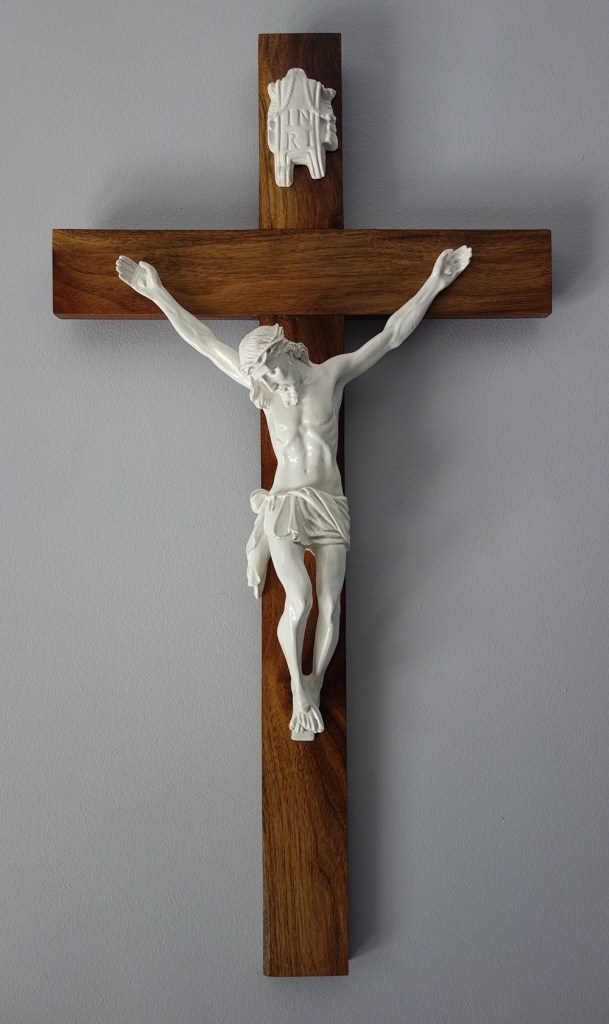


We preach Christ crucified!
Christ is the center in both our preaching and teaching. The forgiveness of sins is at the heart of the Divine Service.
We believe…
…in the one true God, the Holy Trinity, Father, Son, and Holy Spirit, who is the Creator and Sustainer of all things;
…that all people are in bondage to sin, death, and the devil, and are unable to free themselves or make themselves right with God by their own powers;
…that Jesus Christ, true God and true man, lived a perfect and holy life for us, shed His blood for us on the cross to atone for our sins, and rose from the grave on the third day declaring His victory over Satan and the grave for us;
…that God has declared the whole world “not guilty” because of what Jesus did upon the cross and not because of what we do;
…that the Holy Spirit delivers Christ’s forgiveness, life, and salvation to us — fully and freely — through the preaching of the Word, through baptism, absolution, and the Lord’s Supper;
…that Christ is working in us to lead lives of faith toward God and fervent love toward one another in the vocations to which He calls us;
…that Christ’s Church is to send out workers to proclaim the Gospel and is to bear witness to the living hope she has in Christ Jesus with gentleness and respect;
…that Christ’s Church is to actively extend God’s mercy to the poor and weak and defenseless, showing love to our neighbors;
…that Christ will come again on the Last Day to judge the living and the dead and to give eternal life to all who believe in Him;
…that the entire Bible is the inerrant, inspired, and holy Word of God and the source and norm of Christian doctrine; and that the confessions of the Evangelical Lutheran Church as found in the Book of Concord of 1580 are a correct exposition of this Word of God.
Worship at Zion
We follow the liturgy as found in The Lutheran Service Book.
Zion Lutheran Church is faithful to the Holy Scriptures and to the Lutheran Confessions.
The Lord’s Supper is served every Sunday.
We are a member of the Lutheran Church—Missouri Synod.
The Divine Service
Here are a few questions and answers to help us understand what really takes place on Sunday morning and to appreciate the wonderful gift of forgiveness which our Lord gives to us poor sinners.
WHAT IS THE RHYTHM OR THE DIRECTION OF THE DIVINE SERVICE?
The Divine Service is, first and foremost, God coming to us with His gifts of forgiveness, life, and salvation. The action is always from God to us. He is the giver, and we are the receivers. He speaks, and we listen. Faith, then, believes in the promises of God which were just spoken. Faith acknowledges the gifts received with eager thankfulness and praise, and faith extols the Giver for his merciful goodness.
What happens on Sunday morning is not merely something we do as an act of reverence to God. Worship should not be centered around an individual’s feelings, wants, or desires. God is not present in worship to entertain us but to save us.
WHAT IS THE LITURGY?
The liturgy serves to provide the structure through which forgiveness, life, and salvation are delivered to the congregation. It provides the form and shape of the service. The liturgy has been developed over centuries from every time and place. The text comes from the Bible directly or from the church’s age–long treasury of prayers and poetry.
DOES THE FORM AND SHAPE OF THE SERVICE AFFECT FAITH?
Yes! The early church always said, “What is prayed is what is believed.” In other words: “As we worship, so we believe; and as we believe, so we worship.” If someone wants to understand what we believe, they will need to join us in worship. A desire to change the music and liturgy may be a way to undermine the way Lutherans view the gospel and sacraments. An unhealthy change in worship may indeed signal an unhealthy change in doctrine.
WHAT GOOD IS THE HYMNAL?
The hymnal is one of the most important books in teaching the faith. The hymnal also serves as a daily prayer book. Through repetition of basic, Gospel–centered texts from Holy Scripture, the people of God are schooled in the fundamental teachings of the Christian faith. When the repetition of texts is abandoned in favor of new materials each week, it seriously compromises the faith of God’s people, especially children and the elderly.
SHOULD THE CHURCH’S MUSIC AND HYMNS REMAIN FAITHFUL TO THE WORD OF GOD?
Yes! Hymns are simply doctrine put into poetic form. Change the doctrine in a hymn, and you change the faith. Just because a self–chosen form of worship may appeal to an individual’s feelings or desires does not mean that it should be used. When a homemade order of service seeks to be “relevant”, it runs the risk of turning attention away from God and onto ourselves. When the Divine Service is faithful to the Word of God, it often has to take up the task of opposing the culture.
The hymnal is not the work of one person, one denomination, one culture, or one generation. Our hymns not only reflect the great Lutheran tradition, but they also come from ancient Hebrew, Greek, Latin, European, African, North American, and African–American sources.
WHAT SHOULD THE CRITERIA BE FOR CHOOSING MUSIC IN THE CHURCH?
The church’s music and hymns should focus attention on God’s plan of salvation, on the person and work of Christ, and on the nature and blessings of the Lord’s Supper. It should be Christ–centered and not man–centered. It should focus on what the people need (i.e. the forgiveness of sins) and not on what they want. It should be centered on building faith in Christ and not building up the emotions. It should be holy and not casual. It should be a common form and language for everyone (old and young, rich and poor, parents, and children) and not cater to one particular generation. It should focus on God’s gift of sacrament to us and not on man’s desire to appease God through sacrifice. The culture should not influence the church, but worship should influence the culture. The Divine Service should not be like the local pop concert. Instead, it is a “heaven on earth”. The Divine Service is holy and different than anything in this world.
(https://faithplano.org/about/divine-service/)

 Zion Lutheran Church - Ainsworth
You must be logged in to post a comment.